

Pathfinder
Industrial Water

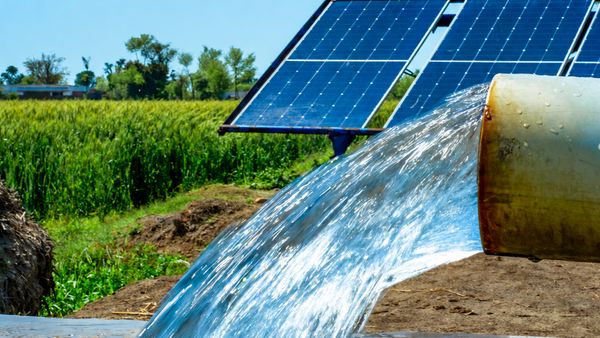
Water is fundamental to quality of life, economic growth, industrial productivity, and energy security, yet remains one of the world’s most underinvested infrastructure challenges. The supply, use, and treatment of water in industry is becoming a strategic business issue. The industrial water management market is growing (from ~$10.6bn in 2025 to ~$14.2bn by 2033), yet water is still often treated as a low-cost input despite rising scarcity, tighter regulation, and increasing disruption risk.
Industry accounts for ~20% of global freshwater withdrawals, and for many companies the biggest exposure is not only within factory walls, but upstream in supply chains, where water-intensive commodities are sourced from increasingly stressed and contested basins. The SMI’s convening power across industry, technology, engineering, and finance positions it uniquely to accelerate adoption of water-efficiency solutions by bringing together major water users, project developers, and capital providers to scale practical solutions and deliverable projects that improve both water resilience and economic performance.
Problem statement
• Industrial Water Use: Successful water-efficiency interventions by industrial and corporate users already exist, yet these success remain fragmented, poorly shared and rarely translated into practical playbooks that others can adopt, leaving a near-term opportunity for impact largely untapped.
• Investment & Finance: Water remains one of the world’s most underinvested and under-digitised infrastructure challenges. The technologies exist, but projects often lack the bankable structures, revenue models, regulatory certainty and financing mechanisms required to attract private capital at scale.
• Water-Energy Nexus: Water and energy are increasingly interconnected, from desalination and pumping costs to AI factories and industrial operations, and current policy signals and subsidy structures often discourage the efficiency improvements needed to address both together.
Implementation pillars
Water-Energy Nexus and Data Centre / AI Facility Water Management
Developing a potential AI / data centre water pilot to establish practical models for measuring and reducing water intensity. This project will assess the interconnection between water and energy use, including desalination and pumping costs, and reduced energy demand, costs, and emissions.
Demonstration Projects & Investable Pipeline
Real-world pilot projects focussing on measurable water efficiency will be developed and delivered by partners. This includes the development of an alliance, providing access to knowledge and lessons learned across the ecosystem. A water-efficiency financing structure will also be identified, alongside a potential pipeline of replicable projects and models for deployment.
Policy, Metrics & Amplification Across Platforms
The SMI will support policy development, identifying opportunities for clearer public-private collaboration. Shared metrics, KPIs, and approaches to measuring water savings and economic value will be developed and shared for replication across companies and geographies
Showcasing & Amplification
The SMI will recognise companies and countries demonstrating impactful industrial water efficiency efforts, and showcase leading efforts across stakeholder groups via alliance opportunities, traditional media, SMI platforms, and SMI Roundtables & Exhibitions. A practical playbook outlining a clear blueprint for water efficiency successes will be developed to support widespread ecosystem adoption.